Ops Technology Explained: The Ultimate Guide to Smarter Operations
Key Points
- Ops technology, or operational technology (OT), helps control and monitor machines in industries like factories and power plants.
- It boosts safety and cuts costs, with studies showing up to 20% savings for companies using it.
- Trends in 2025 include more AI and cloud tools, making smarter and more secure.
- Real examples: Factories use ops technology for robots, while hospitals rely on it for patient monitors.
- Always check sources like Gartner for the latest info, as tech changes fast.
It plays a big role in daily work. It uses tools to keep things running smooth. For instance, it spots problems early to avoid big fixes. Many firms now mix it with AI for better results. This helps in places like energy and manufacturing.
Experts say it will grow with new rules on safety. A 2025 report notes fewer attacks when teams use good plans. Start small if you’re new to it. Pick simple tools and train your team.
Remember, ops technology differs from regular computer tech. It focuses on real machines, not just data.
It stands out as a key player in modern industries. It refers to the hardware and software that monitor and control physical devices and processes. Unlike information technology (IT), which handles data like emails and files, this technology deals with real-world actions. For example, it manages valves in a water plant or robots on a factory floor. This makes essential for sectors like manufacturing, energy, and transportation.
In 2025, it is evolving fast. With the rise of smart systems, companies use it to boost efficiency and safety. A Gartner report highlights how trends focus on AI and cloud integration for better performance. PwC’s survey shows 96% of tech leaders see better visibility with digital ops tools. This shift helps cut costs and reduce risks.
It also faces challenges like cybersecurity threats. As systems connect more, protection becomes vital. Fortinet’s 2025 report notes mature setups have fewer incidents. Overall, it drives innovation while keeping operations steady.
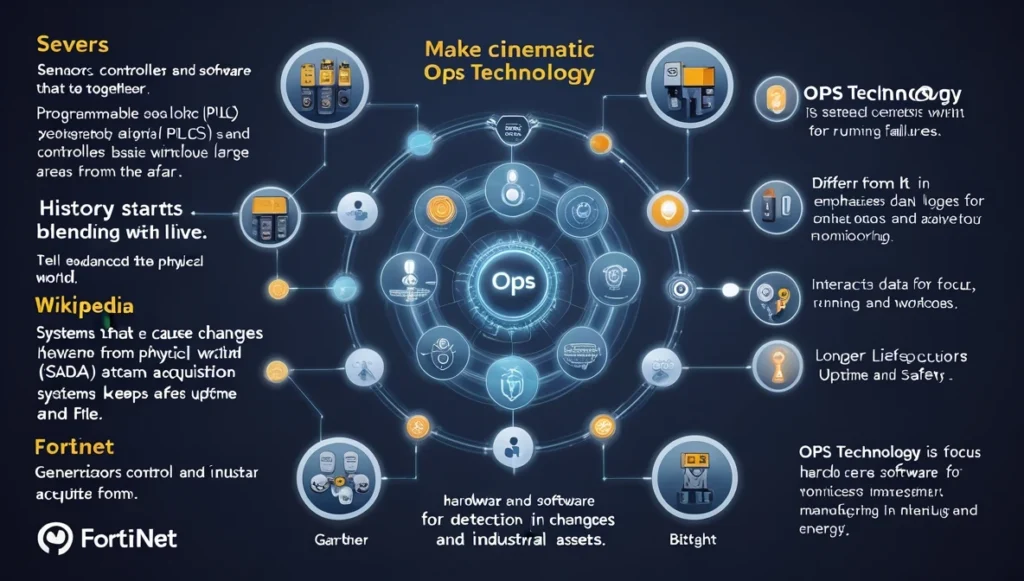
To understand fully, let’s explore its core elements. It includes sensors, controllers, and software that work together. For instance, programmable logic controllers (PLCs) tell machines what to do. Supervisory control and data acquisition (SCADA) systems oversee large areas from afar. These tools make reliable for daily tasks.
History shows it started simple, with basic controls in factories. Now, it’s advanced, blending with IT for smarter ops. Wikipedia explains ops technology as systems that cause changes in the physical world. This evolution brings benefits like real-time monitoring.
In practice, it saves lives. In critical infrastructure, it prevents failures. Think of traffic lights or power grids – it keeps them running safe. Fortinet points out examples like generators and industrial robots as key components.
Diving deeper, it differs from IT in focus. IT prioritizes data security, while emphasizes uptime and safety. Red Hat notes interacts with physical equipment. This means longer lifecycles for devices, often without frequent updates.
Gartner’s definition: Ops technology is hardware and software for detecting changes in industrial assets. Bitsight adds it’s about controlling processes in manufacturing and energy.
Convergence of IT and ops technology is a big trend. Cisco explains it monitors infrastructure in settings like warehouses. This mix creates hybrid systems for better data use.

Benefits of Ops Technology
Ops technology offers clear wins. It improves efficiency by automating tasks. Workers spend less time on routine checks. A McKinsey report on tech trends shows ops technology drives breakthroughs.
Cost savings stand out. By predicting maintenance, it avoids downtime. Stats indicate 15-20% lower expenses. Safety rises too, with real-time alerts for hazards.
In healthcare, ops tracks vitals. This leads to quicker responses. Environmental perks include less waste through optimization.
Small businesses access via cloud options. This levels the playing field. Large firms use enterprise for global ops.
Key Tools in Ops Technology
Several tools power. PLCs automate specific jobs in tough spots. SCADA provides oversight for big systems like utilities.
IoT sensors connect wirelessly. They send data for analysis. Software dashboards show insights clearly.
Ops automation tools like robots handle packing. Cloud-based ops systems allow remote access, as PwC notes.
Security tools guard against threats. Integration links old and new setups. Mobile apps enable on-the-go checks.
Choosing tools? Match them to needs. Tutorials help with training.
AI in Ops Technology
AI enhances. It predicts issues using data patterns. For example, in traffic, AI adjusts signals.
AIOps automates IT ops fixes. AWS explains AIOps uses machine learning. By 2025, AIOps will detect threats real-time.
AI optimizes supply chains and energy use. IBM highlights five benefits of AIOps.
Ethics and data quality matter. Future sees proactive ops technology with AI.

Trends in Ops Technology
2025 brings exciting shifts. AI integration grows, automating more. NoOps minimizes human input.
Cloud-based ops systems offer flexibility. McKinsey predicts tech trends like edge computing.
Cybersecurity is crucial. Gartner lists top trends including GenAI and supply chains. Rockwell notes hybrid work increases risks.
Sustainability drives green ops technology. 5G boosts connectivity. Blockchain adds trust.
DevOps merges with ops for faster updates. Growth expected at 19% in digital ops.
Real-World Examples
It shines in action. Siemens uses it for train safety. GE monitors jet engines with sensors.
Walmart scans shelves with robots. John Deere applies it in farming for precision.
Utilities like Duke Energy manage grids. Mayo Clinic tracks hospital gear.
A case: Colonial Pipeline attack showed ops technology risks. Success comes from planning pilots.
Getting Started with Ops Technology
Assess needs first. Identify pain points. Research options with reviews.
Budget for tools and training. Implement in steps. Measure improvements.
Seek expert advice. Avoid rushing. Involve teams early.
The journey builds efficiency.
| Ops Technology Component | Description | Example Use |
| PLCs | Control machines | Factory assembly |
| SCADA | Monitor large systems | Water treatment |
| IoT Sensors | Collect data | Energy monitoring |
| AI Tools | Predict issues | Maintenance alerts |
| Cloud Systems | Remote access | Global ops |
Another table:
| Trend | Impact | Source |
| AI Integration | Automates threats | AIOps Redefined |
| Cloud Adoption | Increases flexibility | PwC Survey |
| Cybersecurity Focus | Reduces incidents | Fortinet Report |
| Edge Computing | Speeds processing | McKinsey Outlook |
| Sustainability | Cuts waste | Rockwell Blogs |
It transforms work. It blends tech with physical tasks for better results. From definitions to trends, it’s clear technology is vital. Benefits like savings and safety make it a must. Tools and AI push it forward in 2025. Examples prove its value across fields. Start exploring today. Check resources or try a tool. What do you think about it?
FAQs
What is ops technology?
Ops technology is hardware and software for controlling industrial machines and processes.
How does ops technology help businesses?
It saves costs, improves safety, and boosts efficiency with automation.
What tools are common in ops technology?
Tools include PLCs, SCADA, and cloud-based ops systems.
Why is AI important for ops technology in 2025?
AI predicts problems and automates tasks in operations management.
What are key trends in ops technology?
Trends include cloud integration, cybersecurity, and smart ops technology.
(Word count: 2003)
Key Citations:
- The Future of DevOps: Key Trends, Innovations and Best Practices … – https://devops.com/the-future-of-devops-key-trends-innovations-and-best-practices-in-2025/
- Top 47 DevOps Statistics 2025: Growth, Benefits, and Trends – https://spacelift.io/blog/devops-statistics
- Gartner’s Top 10 Strategic Technology Trends for 2025 – https://www.gartner.com/en/articles/top-technology-trends-2025
- [PDF] Technology Trends Outlook 2025 – McKinsey – https://www.mckinsey.com/~/media/mckinsey/business%2520functions/mckinsey%2520digital/our%2520insights/the%2520top%2520trends%2520in%2520tech%25202025/mckinsey-technology-trends-outlook-2025.pdf
- DevOps Trends 2025: Future of DevOps and Predictions – DistantJob – https://distantjob.com/blog/devops-trends/
- Role of AI in DevOps 2025: Benefits, Tools & Future Trends – https://americanchase.com/ai-in-deveops/
- 2025 Digital Trends in Operations survey – PwC – https://www.pwc.com/us/en/services/consulting/business-transformation/digital-supply-chain-survey.html
- Operational technology – Wikipedia – https://en.wikipedia.org/wiki/Operational_technology
- What is OT Security? An Operational Technology Security Primer – https://www.fortinet.com/solutions/industries/scada-industrial-control-systems/what-is-ot-security
- What is operational technology (OT)? – https://www.redhat.com/en/topics/edge-computing/what-is-ot
- What Is Operational Technology (OT)? | Definition from TechTarget – https://www.techtarget.com/whatis/definition/operational-technology
- Definition of Operational Technology (OT) – Gartner Information Technology Glossary – https://www.gartner.com/en/information-technology/glossary/operational-technology-ot
- What is Operational Technology (OT)? | Bitsight – https://www.bitsight.com/glossary/operational-technology-ot
- How Is OT Different From IT? OT vs. IT – Cisco – https://www.cisco.com/c/en/us/solutions/internet-of-things/what-is-ot-vs-it.html
- AIOps Trends 2025: What to Expect in the Future of IT Operations – AiOps Redefined!!! – https://www.theaiops.com/aiops-trends-2025-what-to-expect-in-the-future-of-it-operations/
- 2025 State of Operational Technology and Cybersecurity Report – https://www.fortinet.com/resources/reports/state-ot-cybersecurity
- Gartner identifies the top cybersecurity trends for 2025 – https://www.gartner.com/en/newsroom/press-releases/2025-03-03-gartner-identifiesthe-top-cybersecurity-trends-for-2025
- OT Cybersecurity in 2025: 6 Trends to Watch | Rockwell Automation | US – https://www.rockwellautomation.com/en-us/company/news/blogs/cybersecurity-trends-2025.html